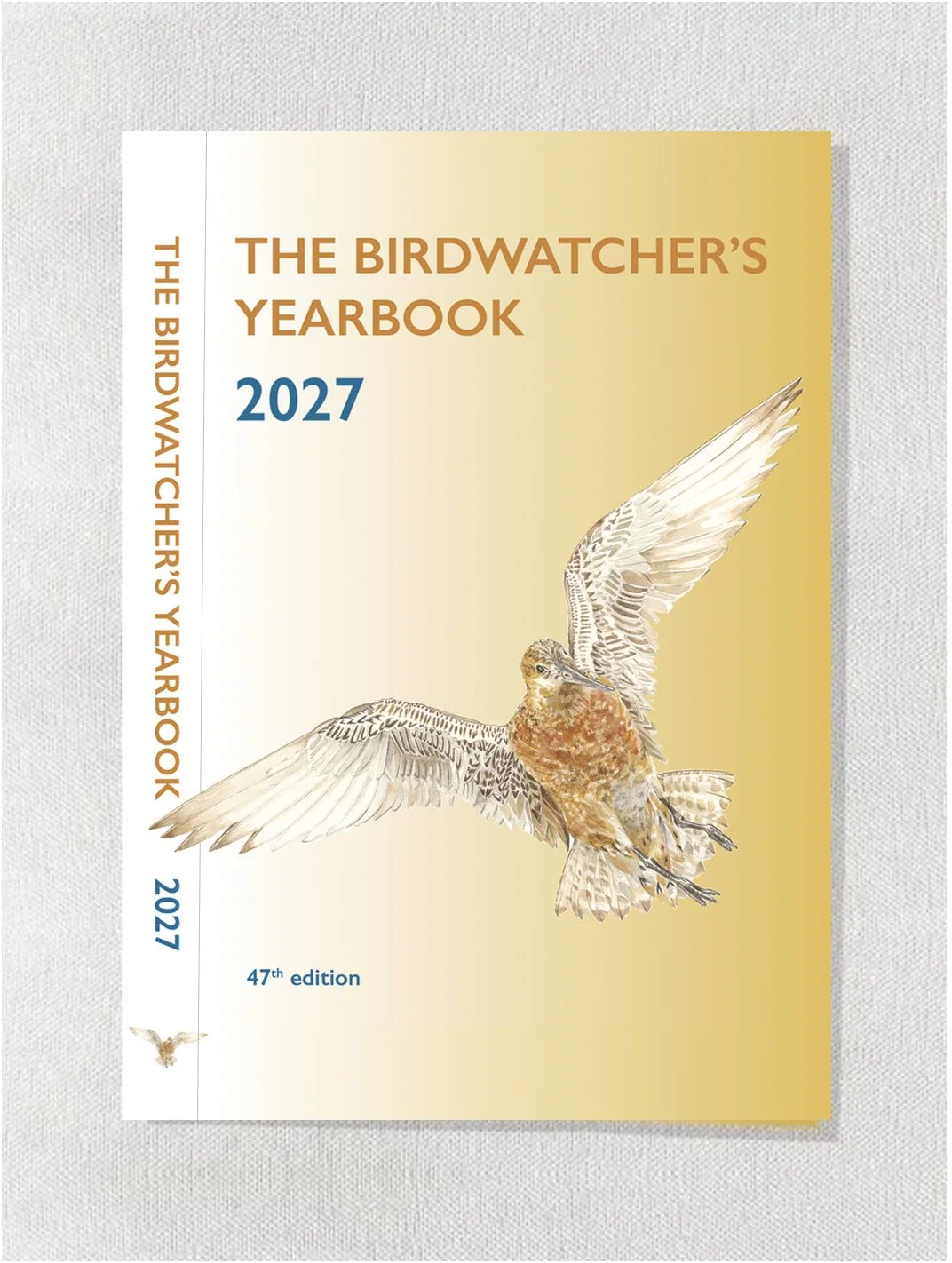
The Birdwatcher’s Yearbook 2027 is a comprehensive companion for birdwatching in the UK
Date of publication: 1 November 2026
Price will increase to £27.00 on 1 October 2026
An additional £8.00 per item will be added for deliveries to addresses outside the UK, Channel Islands and the Isle of Man
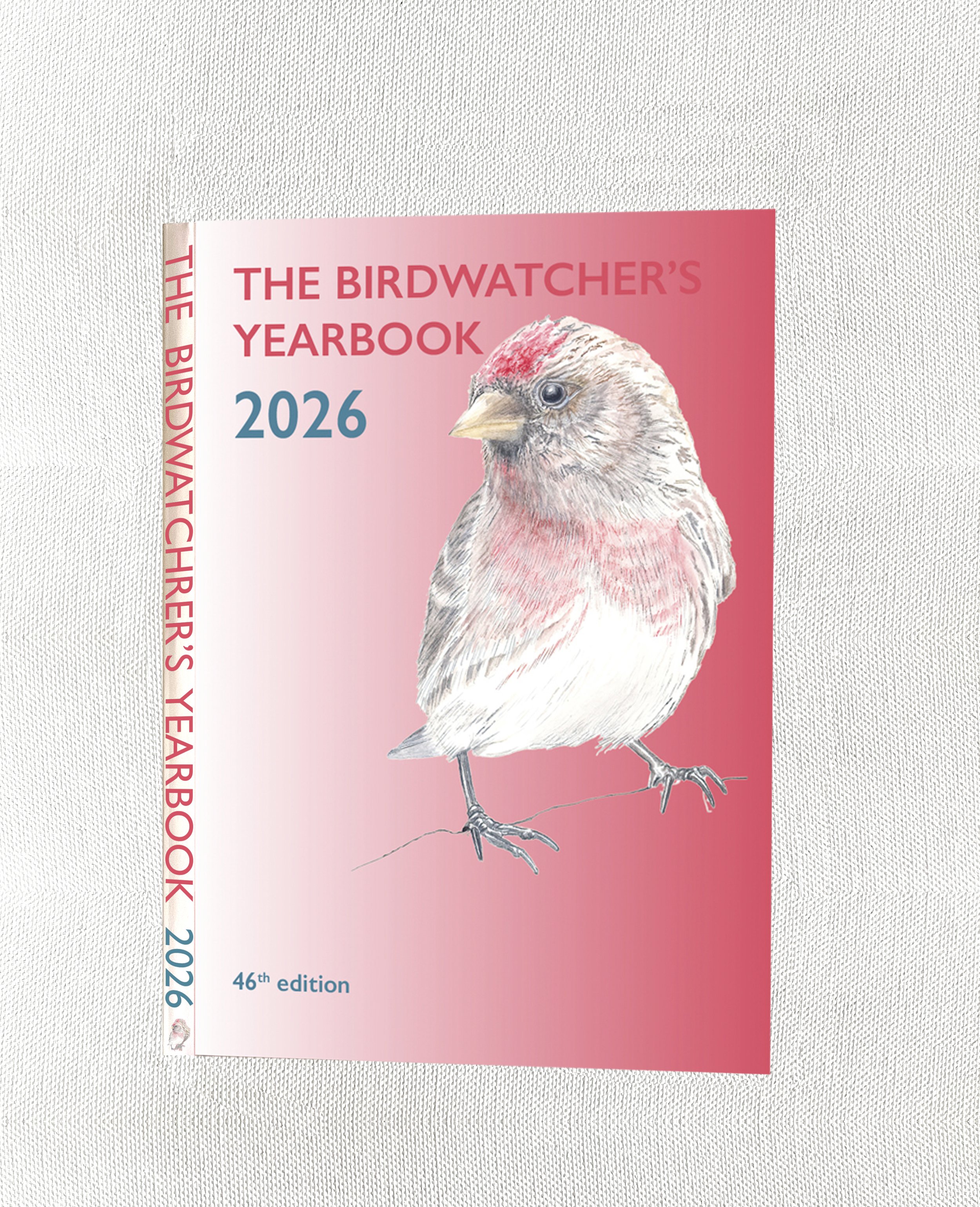
A must-have paperback companion for every birdwatcher. Running to 512 pages, it combines
a diary (with sunrise/set and tide times) and checklist (the full British List rearranged in AviList v25 sequence) for you to plan for and record your trips;
comprehensive county by county listings of contacts and organizations, a selection of reserves (over 730 in total), some well-known, some less so, to give you a heads up on who to talk to and where to go
and directories of artists, lecturers, services and suppliers.
But it’s more than just a notebook and a mine of practical details. James Lowen reviews developments over the last year whilst Gordon Hamlett runs his eye over recent books. Glyn Young argues that it’s not always the best policy to stick to the beaten track and I explain why all the familiar elements of The Yearbook have been tossed in the mixing bowl and served up afresh.
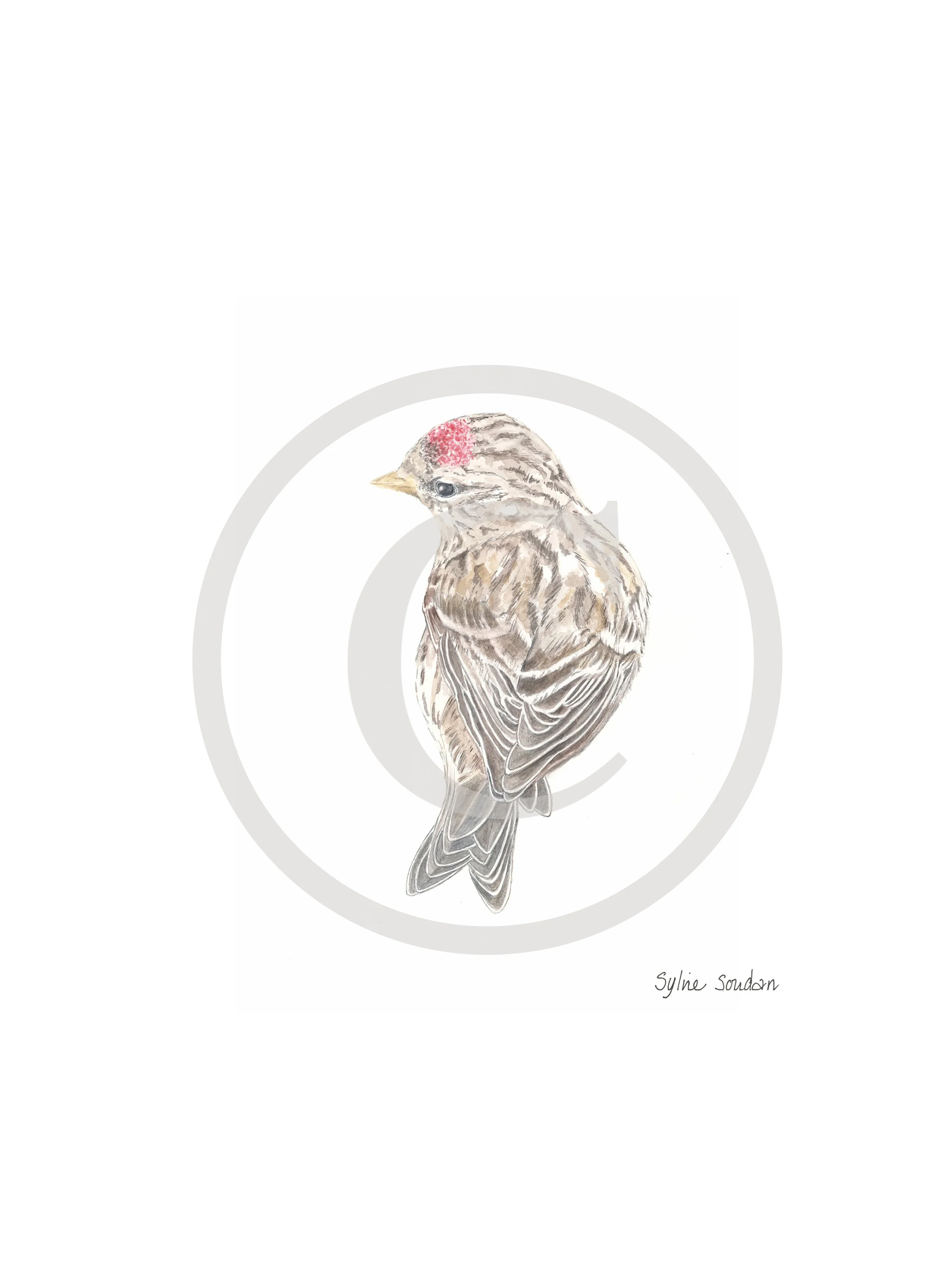
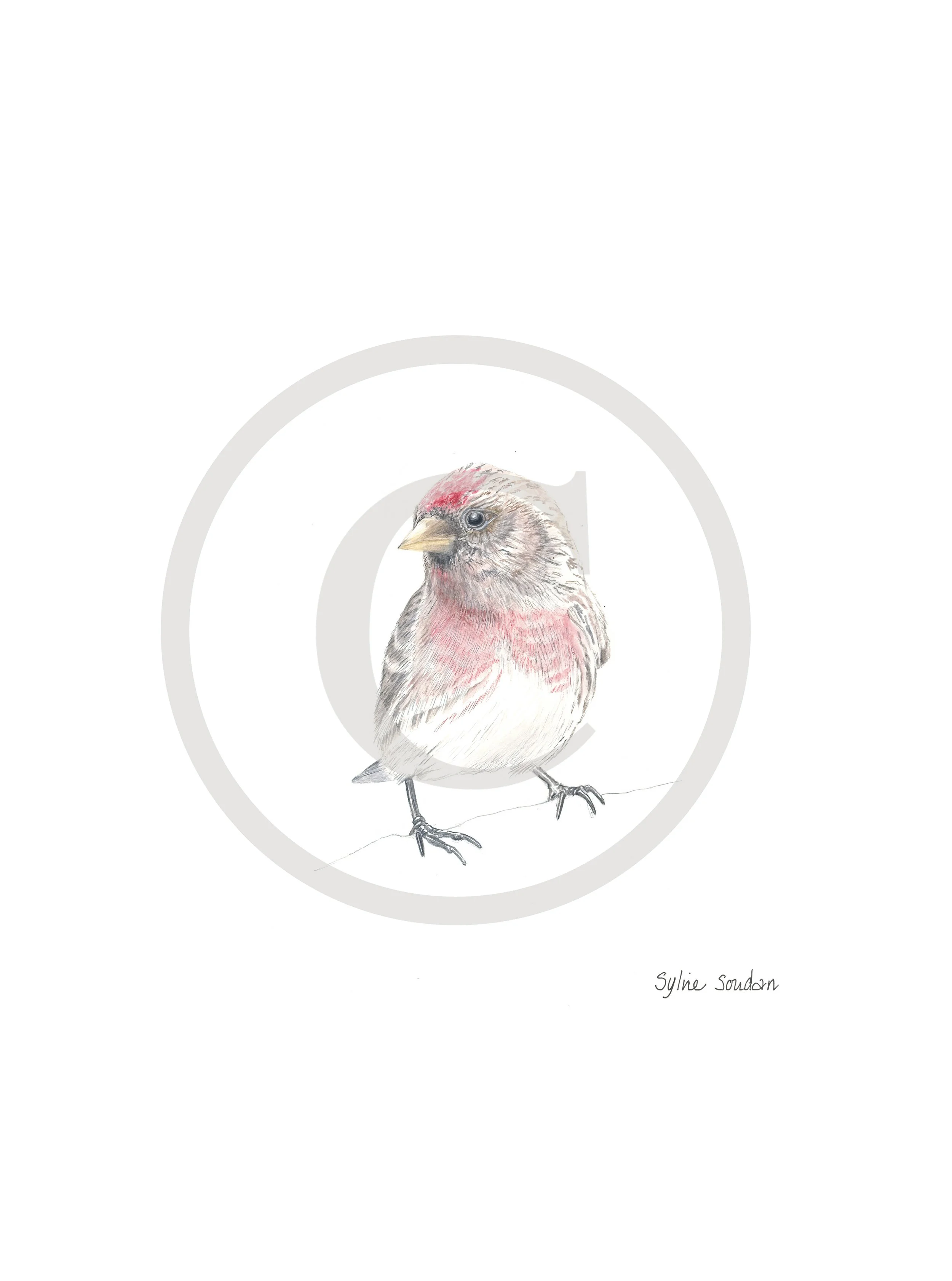
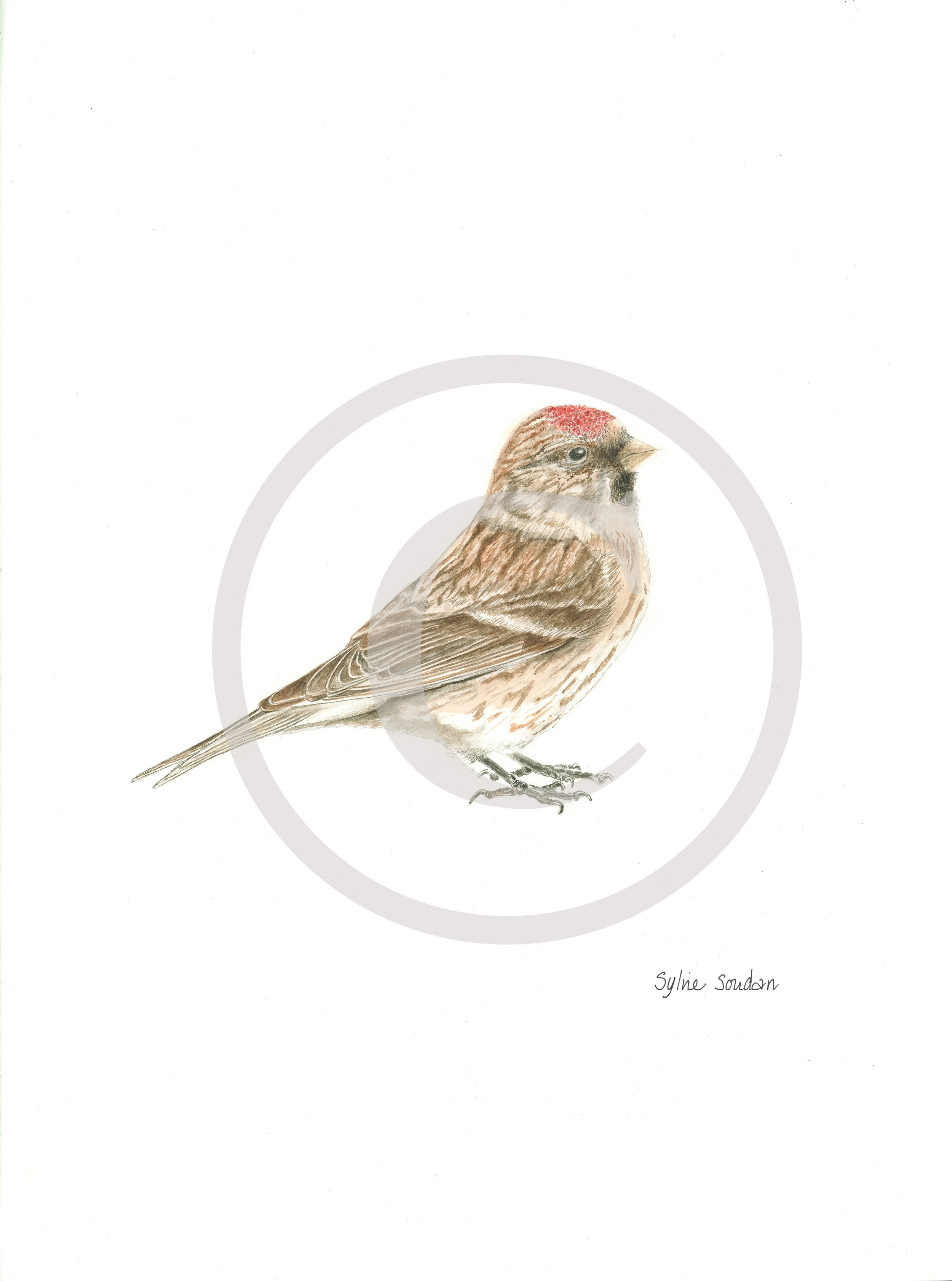
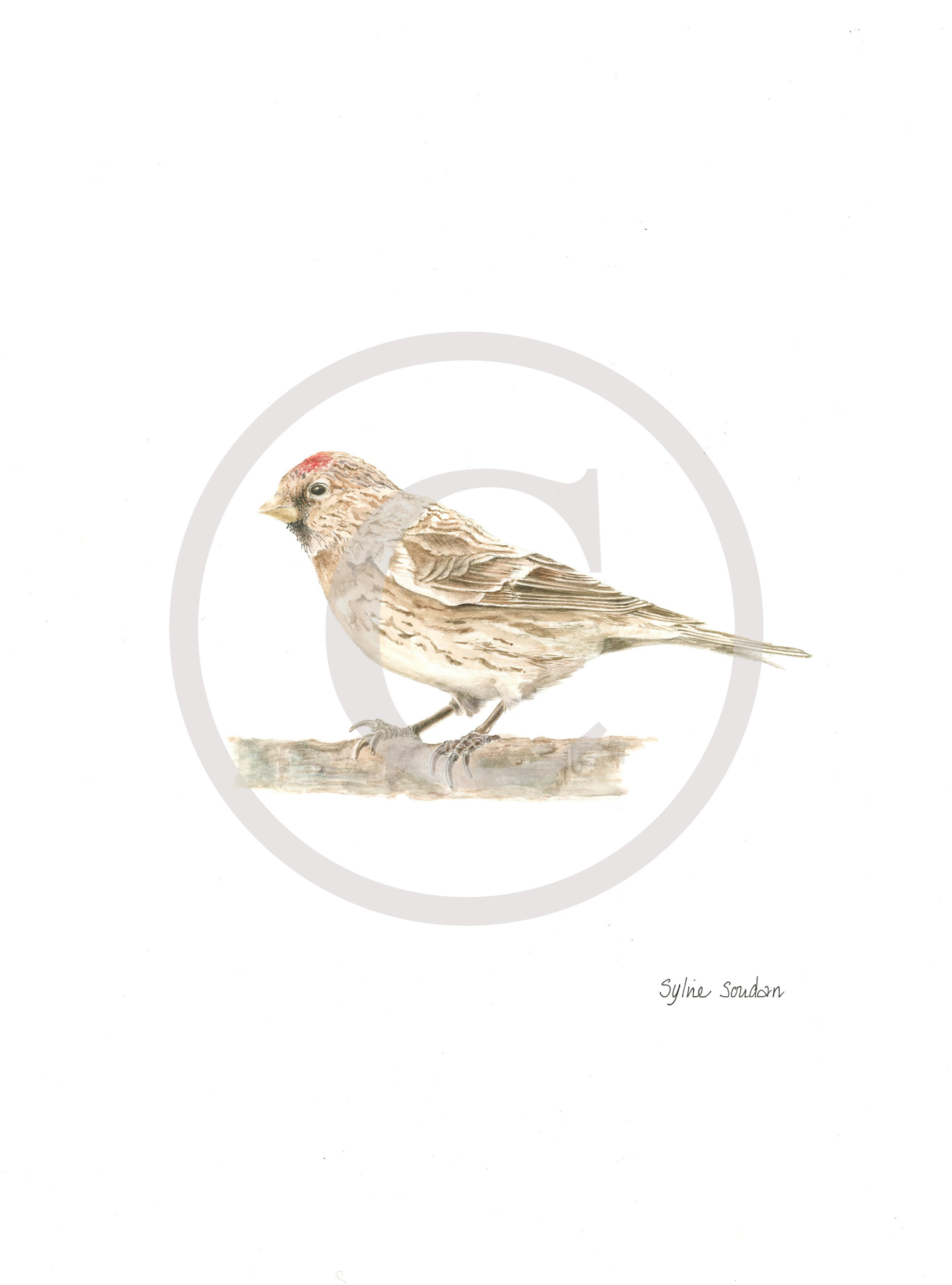
All these facts, figures and lists are now leavened by an array of specially commissioned images, now reproduced in four-colour. Dan Powell offers portraits of a number of species featured in James Lowen’s review, a number of the artists in the Wildlife Art Gallery are showing samples of their work, and Sylvie Soudan has painted a series of images of what were once three separate Redpoll species—chosen as The Yearbook's bird of the year to coincide with its recent lumping.
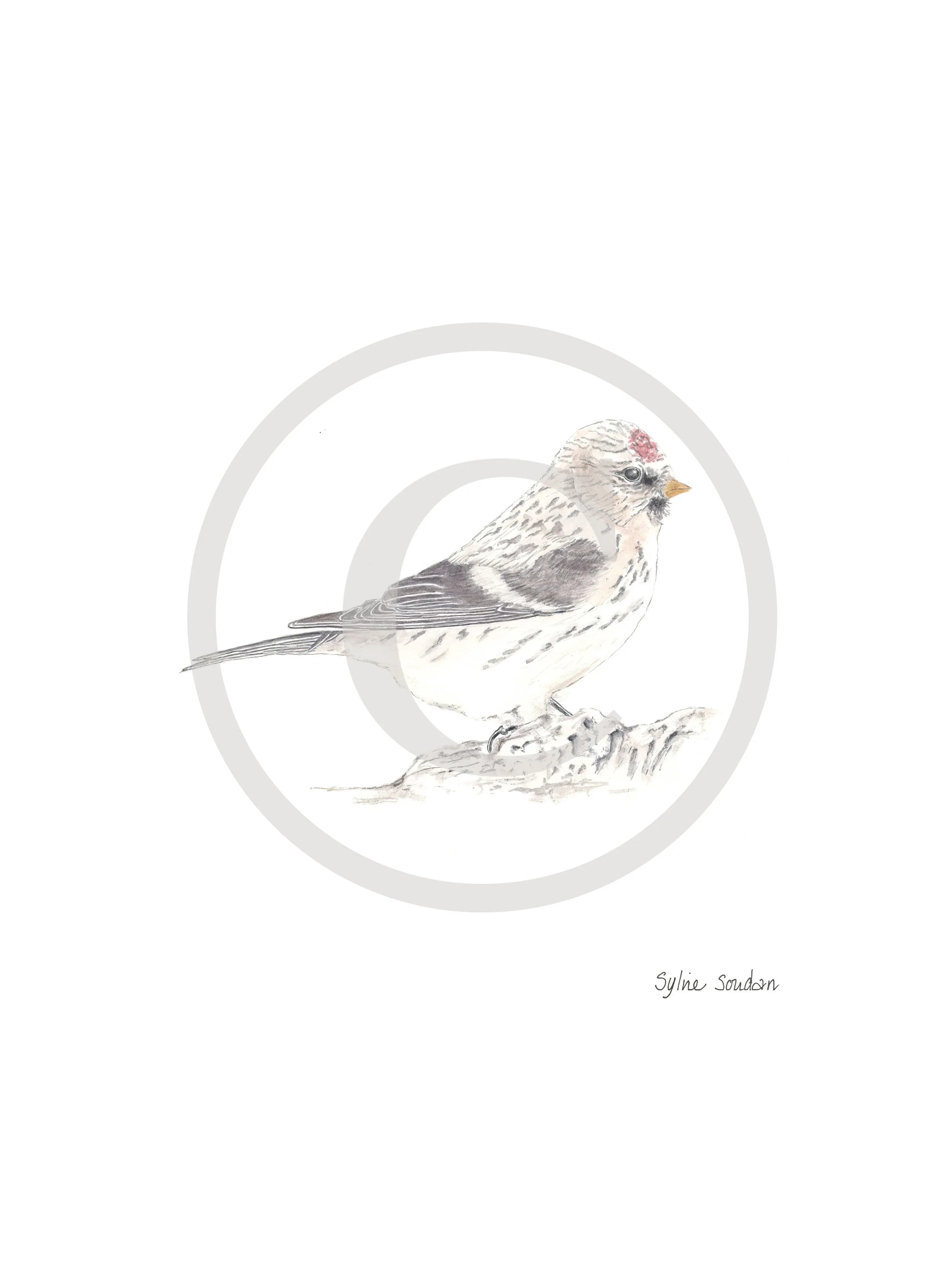
A male Coue’s Arctic Redpoll (Acanthis flammea exilipes). Breeding in Northern Europe, as opposed to Greenland, in the case of the larger and paler Hornemann’s Arctic Redpoll (Acanthis flammea hornemanni), this subspecies is an occasional winter visitor, mainly to the northern parts of Britain.
Print size: 11 × 14”
Giclée printed on Hahnemühle etching paper.
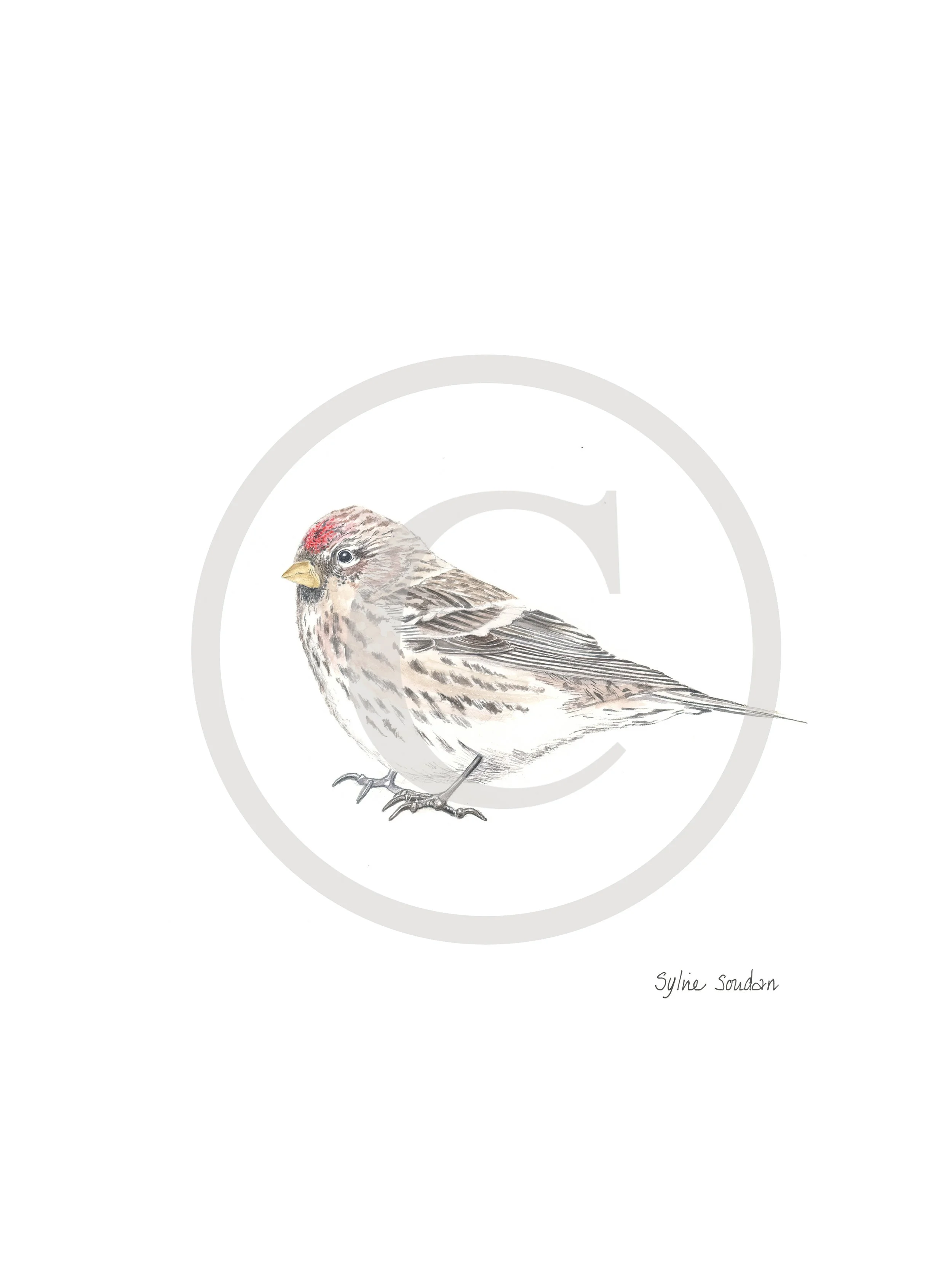
A female Common Redpoll (Acanthis flammea flammea). Primarily a winter visitor from Northern Europe to the British Isles, the Common Redpoll is less common here than the Lesser, larger and with a whiter ground colour to the underparts.
Print size: 11 × 14”
Giclée printed on Hahnemühle etching paper.
No results match your search. Try removing a few filters.